Lake County provides online access to jail booking records through a public portal. The county sheriff maintains this system. People can search for inmates currently in custody. The database shows arrests and bookings from local law enforcement. Lake County uses the CitizenRIMS platform for public access. This system displays information that state law requires agencies to release. You can search by name to find booking details. The portal updates regularly with new arrests. Families use this tool to locate people in custody. Attorneys check it for client information. The public can verify arrest records through this free service.
The county uses CitizenRIMS software to share booking data. This system is at lakecounty.citizenrims.com/incarcerated-people. You can access it from any device. The portal works on phones and computers. Search by first name, last name, or both. Results show current inmates and recent bookings.
Each record includes basic details. You see the person's name and date of birth. Physical description appears in the listing. The booking date and time are displayed. Some records show the arresting agency. Lake County Sheriff's Office books most people. Local police agencies also use the county jail.
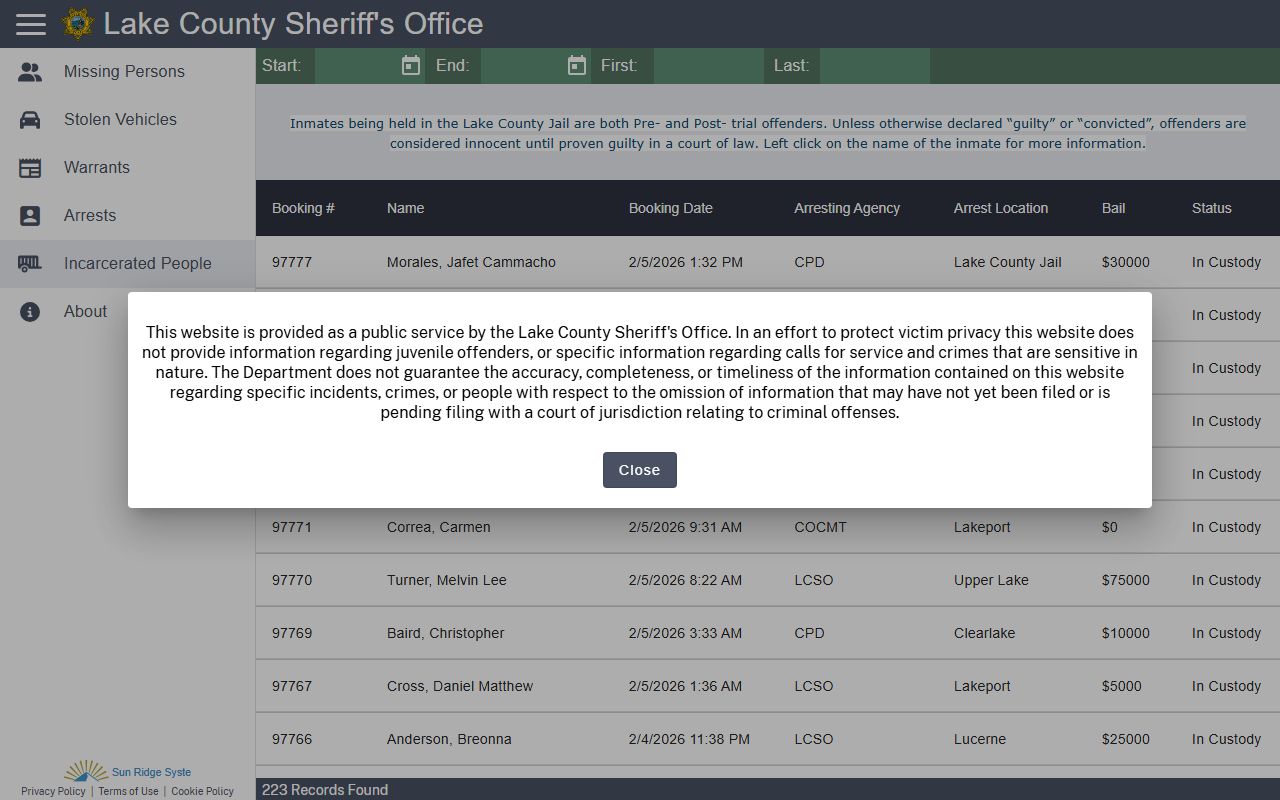
The search interface shown above provides quick access to custody information. Citizens can use filters to narrow results. The system complies with Government Code Section 7923.600. This law requires release of booking information to the public.
Lake County has no cities over 100,000 people. The largest communities are Clearlake and Lakeport. All arrests go to the county jail facility. The sheriff's office operates detention services. They book people arrested anywhere in the county.
Contact the jail for information not available online. Staff can verify custody status by phone. They answer questions about the booking process. Hours of operation apply to in-person visits. Phone lines operate during business hours for records requests.
State law lists specific details that must be public. The full name of every arrested person is releasable. Their occupation can be disclosed. Physical description includes date of birth, eye color, hair color, sex, height, and weight. Time and date of arrest are public. The booking time and date must be shared.
Location of arrest is releasable information. Factual circumstances surrounding the arrest can be disclosed. Bail amount is public when set by a judge or schedule. These requirements come from California Government Code Section 7923.600.
Some details are not public. Full arrest reports remain confidential. These fall under the California Public Records Act exemptions. Suspects cannot get copies of their own arrest reports. Victims and parties to cases can request reports through proper channels.
When deputies make an arrest, they transport the person to jail. Booking staff collect information and take fingerprints. They photograph the individual. Personal property gets stored. The booking process takes several hours. During this time, data enters the jail system.
The online database updates after booking completes. This usually happens within 24 hours of arrest. Sometimes it takes longer during busy periods. The system shows current custody status. When someone is released, they are removed from the active list.
Releases happen for many reasons. Some people post bail. Others get released on their own recognizance. Courts order releases in some cases. Time served leads to release for minor charges. The CitizenRIMS system reflects these changes.
Lake County Superior Court handles criminal cases. The court is separate from the sheriff's office. Court records show what charges were filed. They list hearing dates and case outcomes. Not every arrest leads to charges. Some cases get dismissed. Others result in plea deals or trials.
You can search court records at the courthouse. They maintain public case files. Online access may be available through the court's website. Court records provide more detail than booking logs. They show the full history of a criminal case.
The California Public Records Act gives people the right to request government records. You can ask for arrest reports and logs. Requests should be specific. Name the type of record you want. Provide dates if possible. Include relevant case numbers or names.
Agencies have ten days to respond to requests. They may take an additional 14 days if needed. Some records are free. Others require copying fees. California law sets the cost at ten cents per page for most agencies.
Submit requests in writing for best results. Email works at many agencies. Some have online request portals. The sheriff's office can direct you to the right process. They handle requests for arrest records and booking logs.
Penal Code Section 13300 defines local summary criminal history information. This covers records compiled by local agencies. The law explains what qualifies as criminal history. It sets rules for how agencies maintain and share these records.
Penal Code Section 11105 governs state criminal history records. The California Department of Justice keeps master files. These include fingerprints and arrest records from across the state. Access to state records is restricted. Law enforcement can query these databases. The public cannot directly access DOJ files.
The public can request their own criminal history from the DOJ. This requires a Live Scan fingerprint process. There is a $25 fee. The DOJ provides a summary of your California record. This differs from local arrest records maintained by sheriffs.
The sheriff's office website may have additional information. Press releases sometimes announce major arrests. Statistics on crime and bookings might be available. Contact information for different divisions appears on their site.
Legal aid organizations in Lake County can help with record questions. They assist people trying to understand their criminal records. Some offer help with record sealing or expungement. These services are often free or low cost for eligible individuals.